
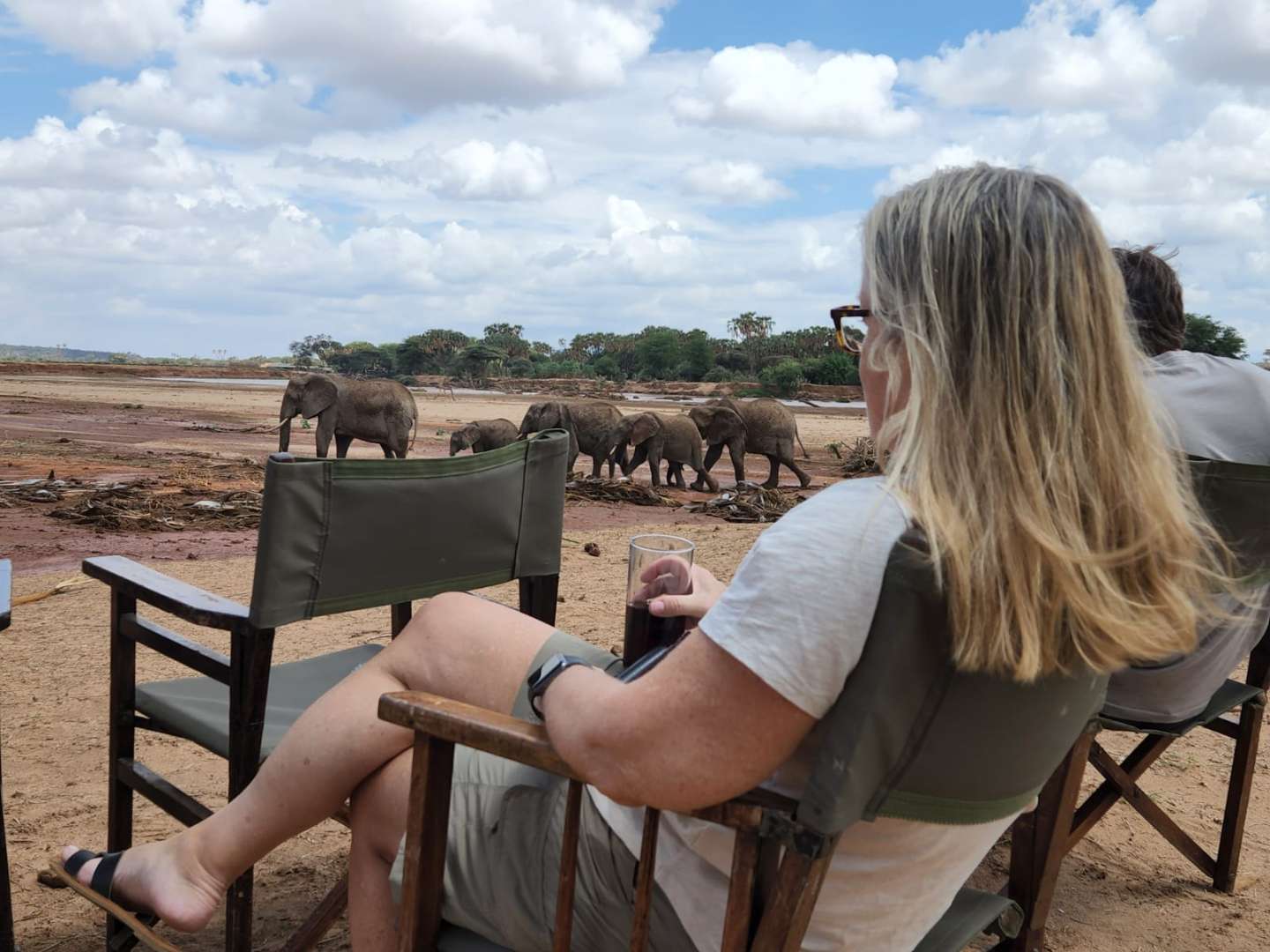
A guest recently asked me, four nights into a Mobile Camp safari, why I had argued so strongly for Samburu when we were planning the trip. We were sitting on a log by the Ewaso Ng'iro river watching a matriarch elephant lead a family down to drink, and behind her a reticulated giraffe walked out of the doum palms, and behind that a single Grevy's zebra stood watching us. I remember not answering, because the question had already answered itself.
It would be easy to do a first East African safari and skip Samburu. Most itineraries do. The Mara is world-famous. The Serengeti is world-famous. Samburu is, by comparison, quiet. You can stand in a Samburu conservancy in the middle of the dry season and not see another vehicle all day. That, paradoxically, is one of the reasons I love it. The other reason is that Samburu has a whole set of species and landscapes you do not see further south.
The Samburu special five
Safari people talk about the "Samburu five" — the species you see here in Kenya's northern rangelands that you don't see in the Mara. Reticulated giraffe, with the sharp-edged brown patches and white lines; Grevy's zebra, taller and more narrowly striped than the common plains zebra; gerenuk, the long-necked browsing antelope that stands on its hind legs to reach the acacia; Beisa oryx, the grey-and-white desert antelope with swept-back horns; and Somali ostrich, with the blue-grey neck and legs.
All five are, in global terms, range-restricted — you really only see them in the horn of Africa and the rangelands of northern Kenya. All five are, in global terms, in trouble. To see all five on the same afternoon, drinking at the same river, is one of the finer experiences in African wildlife travel, and it is routine here.
The country itself
The second reason to come north is the landscape. Samburu is desert-edge country: doum palms, acacia, red rock, and a single permanent river — the Ewaso Ng'iro — which runs through the middle of it and which every living thing north of Mt. Kenya depends on. The light at Samburu is different from Mara light. It is harder, redder, more directional. Photographs you take here will look like no others you have.
Beyond Samburu proper, the country opens up again into the Mathews Range — a range of forested mountains rising unexpectedly out of the plains, home to one of the last viable populations of African wild dog in the country, and to a Samburu community that has co-founded a conservancy as successful as any in East Africa. Higher still, north of the Mathews, you reach Ndoto and Lake Turkana and the Chalbi Desert. You can drive for a day and see three cars.
You can stand in a Samburu conservancy in the middle of the dry season and not see another vehicle all day.
Walking country
Samburu is, for me, the best walking country in Kenya. The acacia and doum palm open up enough to see a long way. The elephant population is habituated to people on foot (with sensible caution). The Samburu community — who have been pastoralists across this country for centuries — are not a tourist attraction; they are who lives here. Walking with a Samburu warrior is one of the closer things you can do in Africa to seeing the country as it has been seen for five hundred years.
We pitch our Mobile Camp in Samburu and the Mathews more often than anywhere else. A typical northern itinerary spends three nights in a Samburu conservancy, moves up to the Mathews for three more, and then fly-camps on a ridge for a single unforgettable night. The whole time, you are in country that almost no other safari in East Africa will take you to.
When to go
Samburu is a dry-country destination, so it is excellent nearly year-round. The only caveats are the two rainy periods — the long rains (April-May) and the short rains (November) — when some tracks can wash out and the river runs high. We generally recommend June-October or January-March. December is also often quietly spectacular.
How to fit it into a trip
If you are doing a two-week safari, I would argue for three or four nights in Samburu as a second leg after a few nights in the Mara. It breaks the trip up; it introduces a different ecosystem; and it puts you in exactly the remote, empty, unexpected country that makes you realise that East Africa is considerably bigger and stranger than the famous parks. The famous parks are famous for good reason. But so is Samburu, once you are standing in it.
If you have a week, and you are prepared to accept that you cannot do everything: pick Samburu and the Mara. Skip everything else. You will still have had a proper safari.
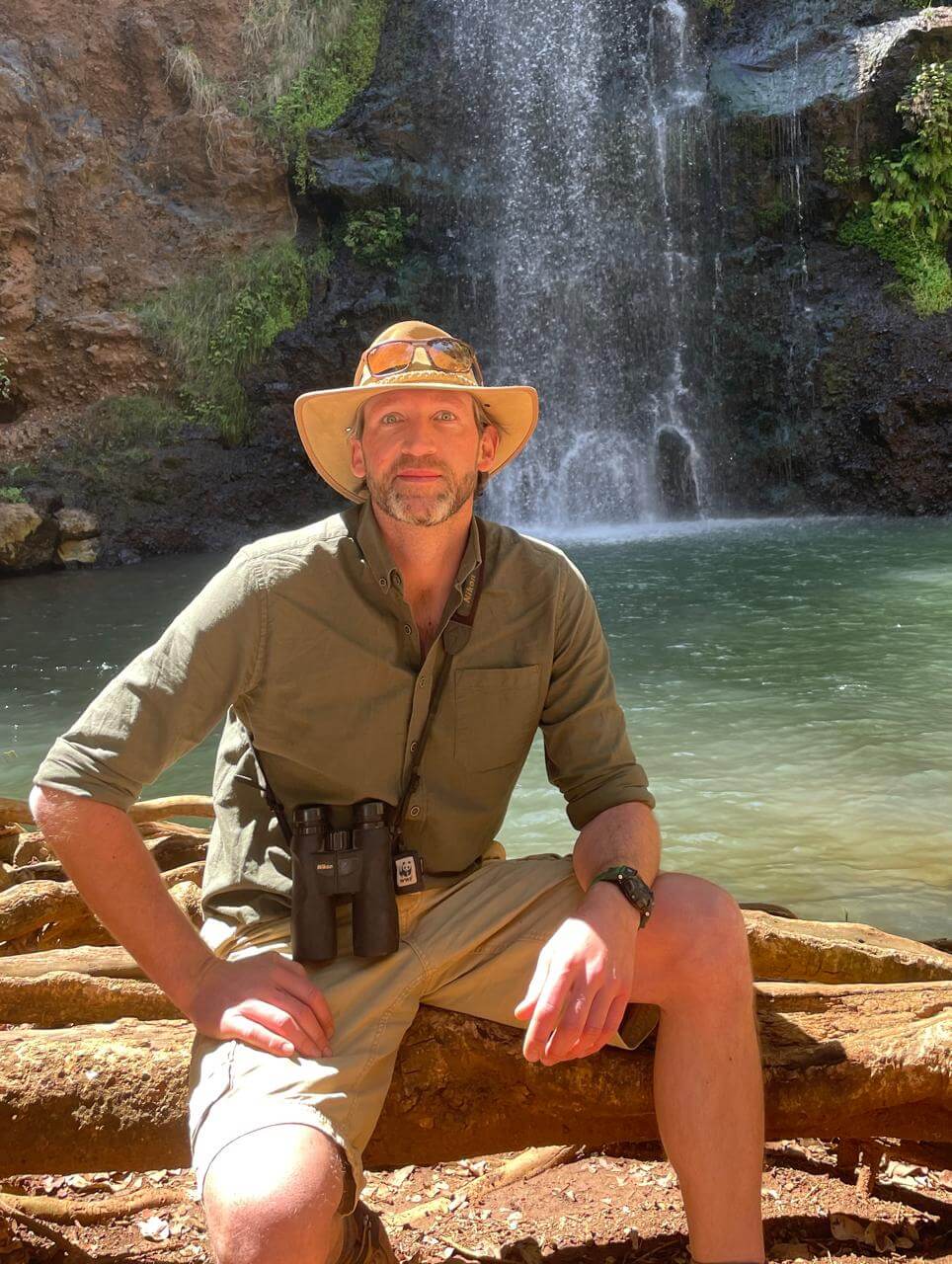
Andy · Senior guide · walking specialist
Andy is a senior guide with Nigel Archer Safaris specialising in walking safaris across Kenya, Tanzania and the Mathews Range.